



HBL NCFP Nickel-Cadmium Batteries
Alpine Power Systems' experienced technical support & sales team is here to assist your needs:
Advanced fiber plate batteries for demanding industrial applications.
On this page:
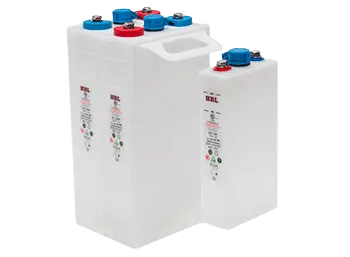
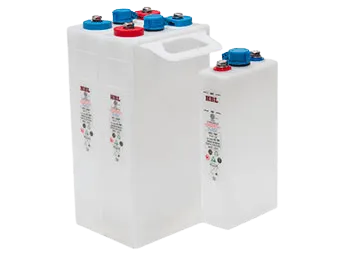
HBL Nickel Cadmium Fiber Plate (NCFP) batteries combine high energy density, excellent cycle life, rapid recharge capability, and rugged mechanical construction. Available in extreme high-rate, high-rate, medium-rate, and long-rate configurations, NCFP batteries can be optimized for a wide range of industrial standby, starting, and cycling applications.
Alpine Power Systems can help evaluate your load requirements, select the appropriate NCFP range, and provide a complete battery solution for your critical application.
Advanced Nickel-Cadmium Fiber Plate Technology
HBL NCFP batteries use a three-dimensional, nickel-plated fiber matrix to retain the active material. This structure provides excellent electrical conductivity while allowing approximately 90% of the electrode volume to be used for active material.
The result is low internal resistance, high discharge performance, improved recharge capability, and greater energy density compared to traditional industrial battery designs.
NCFP batteries are available as individual 1.2 V cells and as multi-cell blocks. Four performance ranges allow the battery to be matched to the required discharge current and duration.
Key Benefits
More than 3,000 cycles under appropriate operating conditions
High energy density
Low internal resistance
Excellent high-rate discharge performance
Rapid recharge capability
Long storage life
Wide operating temperature range
Minimal routine maintenance
No electrolyte replacement required during the battery’s service life
High resistance to electrical and mechanical abuse
Withstands overcharging and deep discharge
Can tolerate accidental reverse charging
Can be stored at different states of charge
Lighter construction than many conventional industrial battery designs
Available as individual cells or multi-cell blocks
HBL NCFP Battery Ranges
KFX Extreme High-Rate Batteries
KFX cells use very thin fiber plates to provide extremely high discharge currents over short durations.
Designed for the most demanding short-duration loads
Capacity range from 11 Ah to 120 Ah
Available in individual cells and selected two-cell blocks
Well suited for applications requiring immediate delivery of very high current
View KFX Technical Data
KFH High-Rate Batteries
KFH cells use thin fiber plates to provide high discharge currents over short durations.
Designed for high-current, short-duration applications
Capacity range from 11 Ah to 300 Ah
Provides a balance between high-rate performance and available capacity
Suitable for starting, switching, and other demanding high-current loads
View KFH Technical Data
KFM Medium-Rate Batteries
KFM cells use optimized plate thickness for applications requiring medium discharge currents and durations.
Designed for medium-rate standby and cycling applications
Capacity range from 11 Ah to 541 Ah
Balances discharge current, runtime, energy density, and physical size
Suitable for applications requiring sustained power over moderate discharge periods
View KFM Technical Data
KFL Long-Rate Batteries
KFL cells use thick fiber plates to provide lower discharge currents over extended periods.
Designed for long-duration power requirements
Capacity range from 20 Ah to 540 Ah
Supports applications requiring sustained backup power
Optimized for longer discharge periods rather than short bursts of high current
Choosing the Right NCFP Range
The correct NCFP battery depends on the required current, discharge duration, end-of-discharge voltage, operating temperature, charging system, and available installation space.
Choose KFX for extremely high current over very short durations.
Choose KFH for high current over short durations.
Choose KFM for medium current and discharge duration.
Choose KFL for lower current over extended durations.
For example, a KFH cell can deliver approximately twice the 15-minute discharge current of a similarly rated KFL cell. Battery selection should therefore be based on the complete discharge profile rather than ampere-hour capacity alone.
Alpine’s application specialists can review your requirements and help identify the appropriate battery range and cell size.
Product Specifications
Battery chemistry: Vented nickel-cadmium
Product range: HBL Nickel Cadmium Fiber Plate (NCFP)
Nominal voltage: 1.2 V per cell
Available configurations: Individual cells and multi-cell blocks
Performance ranges: KFX extreme high-rate, KFH high-rate, KFM medium-rate, and KFL long-rate
Overall capacity range: 11 Ah to 541 Ah, depending on battery range
Cycle life: More than 3,000 cycles under appropriate operating conditions
Container options: Translucent polypropylene with special container options available
Plate construction: Nickel-plated three-dimensional fiber matrix
Plate group construction: Welded for mechanical strength and vibration resistance
Separator: Microporous sintered PVC
Terminal construction: Nickel-plated terminal posts
Standards: Conforms to applicable international standards, including IEC 60623
Certification: Tested and certified by CSA to IEC 60623
Recommended float voltage: 1.40 to 1.42 V per cell
Recommended charging current limit: Maximum 0.2 C5 A
Recommended single-level charging voltage: 1.45 to 1.50 V per cell
Industrial Applications
HBL NCFP batteries are designed for critical applications requiring dependable performance, strong cycling capability, high energy density, or resistance to demanding environmental conditions.
Potential applications include:
Generator and engine starting
Railway and locomotive systems
Switchgear and utility control systems
Telecommunications
Uninterruptible power supply systems
Emergency power systems
Industrial process control
Transportation and signaling systems
Oil and gas facilities
Renewable energy and remote power systems
Applications exposed to vibration, shock, or extreme temperatures
Final battery selection should be based on the application’s specific load profile and operating environment.
Engineered for Performance
Three-Dimensional Fiber Matrix
The nickel-plated fiber structure provides a highly conductive network that helps make active material readily accessible during current collection. This supports low internal resistance and excellent electrical performance.
High Active-Material Utilization
Approximately 90% of the electrode volume is available for active material, contributing to high energy density and a lighter overall cell design.
Graphite-Free and Iron-Free Active Material
The active material does not contain graphite or iron. The absence of graphite helps prevent internal carbonate formation, while the absence of iron helps reduce maintenance requirements.
Elastic Electrode Structure
The elastic fiber electrode helps accommodate volume changes that occur during charging and discharging. It also absorbs shock and vibration stresses, contributing to long cycle life and reliable operation.
Rugged Cell Construction
Nickel-Plated Terminal Posts
Nickel-plated terminal components provide strong electrical conductivity and corrosion resistance.
Welded Plate Groups
Welded plate group construction provides the mechanical strength needed to withstand severe vibration and demanding operating conditions.
Microporous Separators
Microporous sintered PVC separators insulate the positive and negative plates without restricting electrolyte flow.
Translucent Polypropylene Containers
Polypropylene containers provide mechanical strength, electrical insulation, corrosion resistance, and performance across temperature extremes. Their translucent construction also allows easy visual inspection of electrolyte levels.
Flame-Arresting Vent Caps
Flip-open flame-arresting vent caps help prevent flame propagation into the cell while protecting the electrolyte from contamination.
Integrated Splash Guards
Splash guards help prevent electrolyte splashing and reduce the possibility of short circuits caused by foreign objects entering the cell.
Charging Flexibility
HBL NCFP batteries can be charged using common industrial charging methods, including:
Constant-current charging
Constant-voltage charging
Float charging
Trickle charging
Taper charging
Dual-mode boost and float charging
A dual-mode charger is recommended for optimal performance. This approach recharges a discharged battery at a higher boost voltage and current before transitioning to a lower float voltage to maintain the battery at full charge.
For installations using an existing single-mode charger, the battery can also operate with constant-voltage charging. Alpine can evaluate the existing charger and determine whether its voltage, current limit, and charging profile are appropriate for the selected battery.
Available Configurations
HBL NCFP batteries are available as individual cells and multi-cell blocks. System options can include:
Inter-cell connectors
Cable connectors
Terminal hardware
Battery racks
Installation accessories
Maintenance accessories
Special container materials for demanding applications
Certain NCFP cells are also available in structural-foam-molded or stainless-steel containers for specialized operating requirements.
Why Choose Alpine Power Systems?
Alpine Power Systems provides industrial battery expertise throughout the complete system lifecycle.
Application review and battery sizing
Battery and charger system engineering
Replacement battery system design
Battery racks and accessories
Installation and commissioning
Preventive maintenance
Battery testing and inspections
Charger evaluations
Nationwide field service
Battery recycling and disposal coordination
With nationwide service capabilities and decades of critical power experience, Alpine helps customers select, deploy, and maintain reliable battery systems for essential operations.
Find the Right HBL NCFP Battery
Selecting the correct NCFP battery requires more than comparing ampere-hour ratings. Alpine will evaluate your required load, discharge duration, end voltage, charging system, operating temperature, available space, and service conditions to recommend an appropriately sized solution.
Applications
- Emergency Lighting
- Industrial UPS
- Oil & Gas
- Railway & Railroad
- Utilities & Switchgear
Technologies
- Nickel Cadmium (NiCd)
Manufacturer

See below for documentation relating to this product line that is available to download. To download this documentation, please click on the desired document you’d like to download and fill out the required form information fields. You will be able to view and download the documents upon completion of the download form.

Find HBL NCFP Nickel-Cadmium Batteries in the following product categories:
Manufacturer


