



March 9, 2026 | Kadin Wessel
Why Proper Battery Racking Matters in Seismic Zones
News Alerts & Updates
Join our email newsletter for industry trends, best practices, company news, & more.
Share
Seismic Risk Goes Beyond the Building Structure
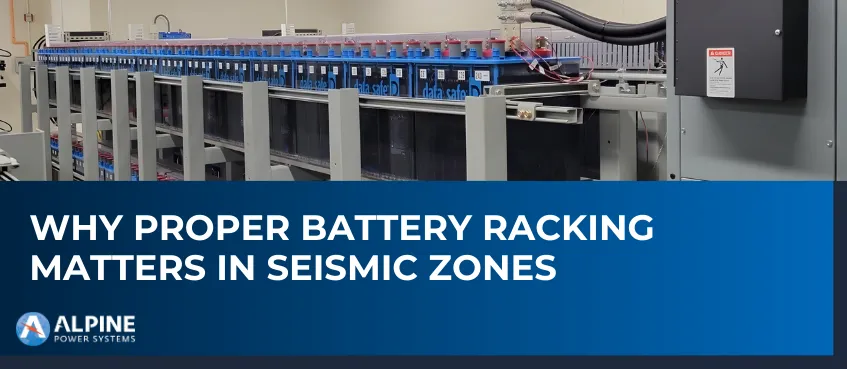
In seismic regions, infrastructure planning must account for more than just the building envelope. Critical power systems inside the facility must also withstand movement and vibration. For sites that depend on battery backup systems, proper battery racking plays a central role in maintaining both safety and uptime.
Battery systems are dense and extremely heavy. In an earthquake, that mass can shift quickly. Without properly engineered racking and anchoring, even a fully functional battery string can become a structural hazard.
The Dangers of Improper Battery Racking
Industrial battery systems often weigh thousands of pounds per rack. During seismic activity, lateral forces place enormous stress on frames, anchors, and connections. If racking is not designed for seismic conditions, facilities risk:
Battery displacement or tipping
Structural rack collapse
Damaged intercell connectors
Electrolyte spills
Electrical faults or arc hazards
Extended downtime during repairs
Even minor structural movement can compromise battery integrity and lead to significant recovery costs.
What Seismic Rated Racking Provides
Seismic compliant battery racks are engineered to absorb and withstand dynamic movement. They typically include reinforced steel construction, cross bracing, calculated spacing between tiers, and anchoring systems designed to meet regional seismic codes.
Proper anchoring is just as important as rack design. Anchors must be installed according to engineered specifications and secured into adequate concrete or structural support. A high quality rack can still fail if improperly installed.
Protecting Personnel and Critical Operations
Battery rooms contain high voltage systems and, in some cases, corrosive materials. Structural failure during seismic activity increases the risk of injury, chemical exposure, and electrical hazards.
For industries such as healthcare, utilities, data centers, and telecommunications, battery systems must remain secure during seismic events to support emergency operations. Structural stability directly impacts operational continuity.
Compliance, Liability, and Long Term Resilience
Many seismic regions require compliance with specific structural and electrical standards. Investing in seismic rated battery racking supports inspection readiness and reduces liability exposure.
More importantly, it strengthens overall resilience. Properly secured battery systems are more likely to remain intact and operational after an event, minimizing recovery time and infrastructure damage.
Why Choose Alpine Power Systems
Alpine Power Systems understands that battery reliability includes structural integrity. Our teams support customers in seismic regions with:
Seismic compliant battery rack design and selection
Engineered anchoring solutions
Professional installation and retrofits
Code compliant inspections and documentation
Ongoing maintenance and structural evaluations
From initial design through long term support, Alpine helps ensure battery systems remain secure, compliant, and ready to perform when needed most.
Explore More Critical Power Articles


